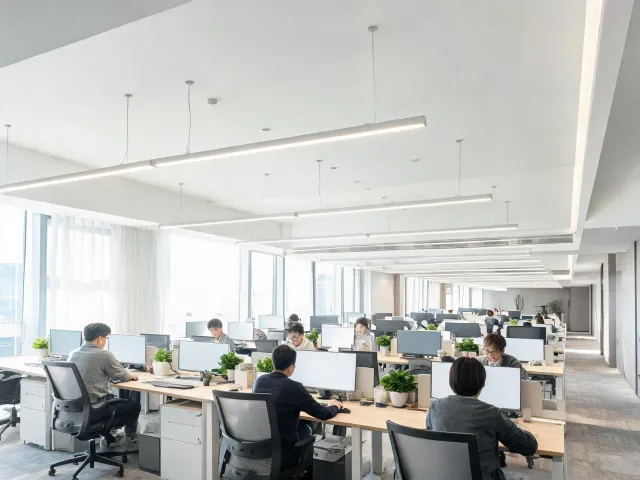
Office
Balance UGR, vertical illumination, daylight harvesting and screen visibility. A 4000 K, Ra 80 baseline may suit general tasks, while design intent can require different CCT or color quality.

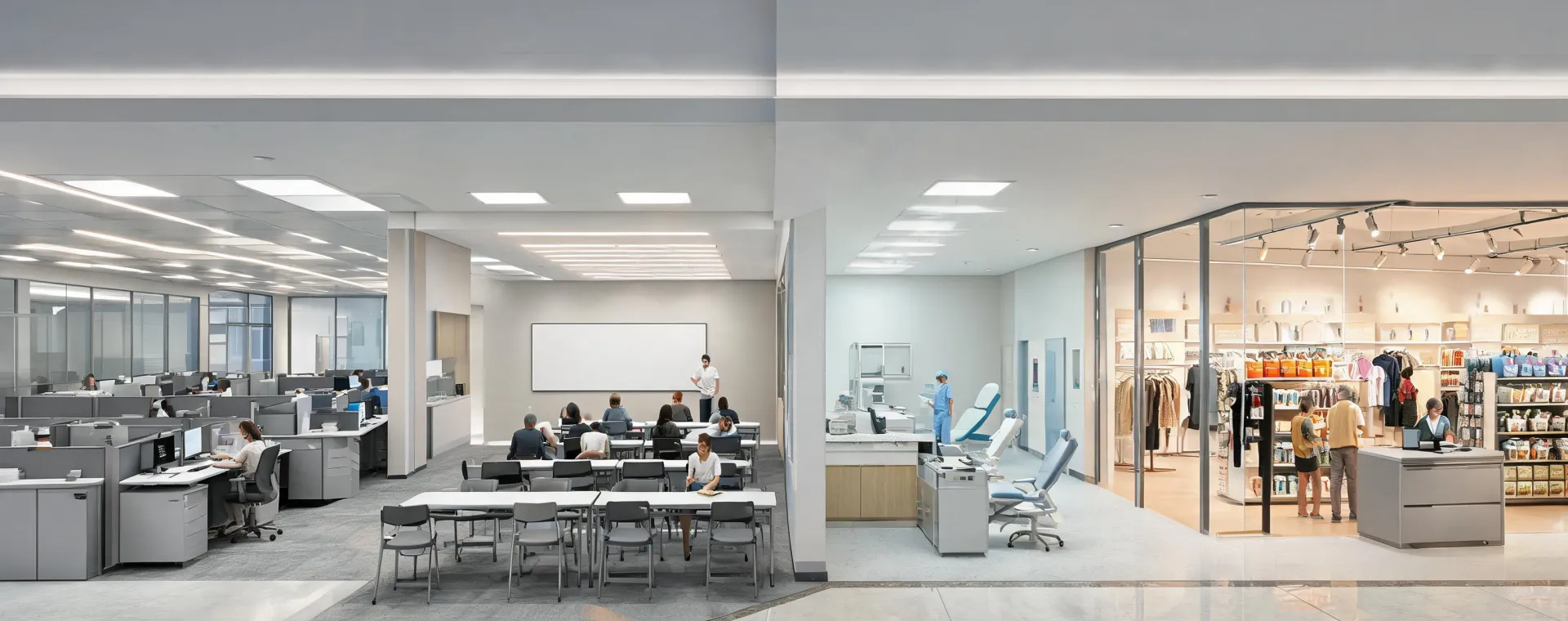
Mounting, occupancy, surface reflectance and maintenance access determine how photometric performance translates into a working space.
Balance UGR, vertical illumination, daylight harvesting and screen visibility. A 4000 K, Ra 80 baseline may suit general tasks, while design intent can require different CCT or color quality.
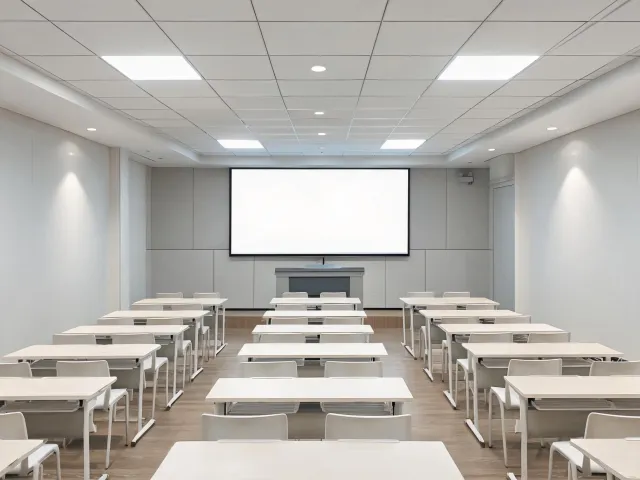
Coordinate teaching scenes, board illumination, sensor timeout and emergency operation. Controls zoning should follow use patterns rather than a uniform floor plan.
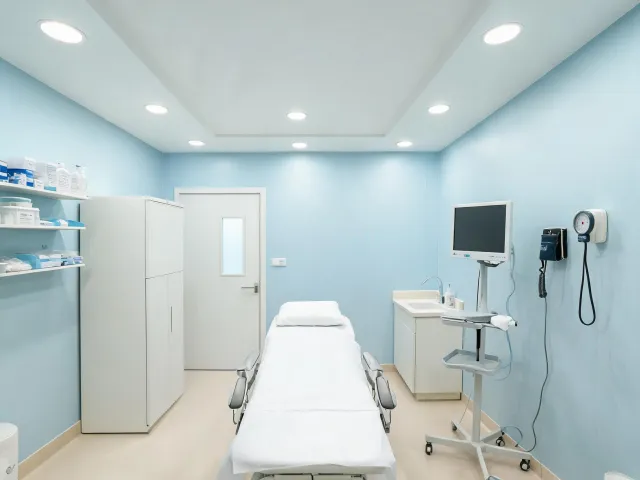
Review visual acuity, cleaning access, color rendering and patient comfort. Clinical tasks may need Ra 90+ and careful spectral evaluation beyond a single CRI value.

Use beam angle, candela distribution and TM-30 data to control hierarchy and material appearance without relying on total lumens alone.
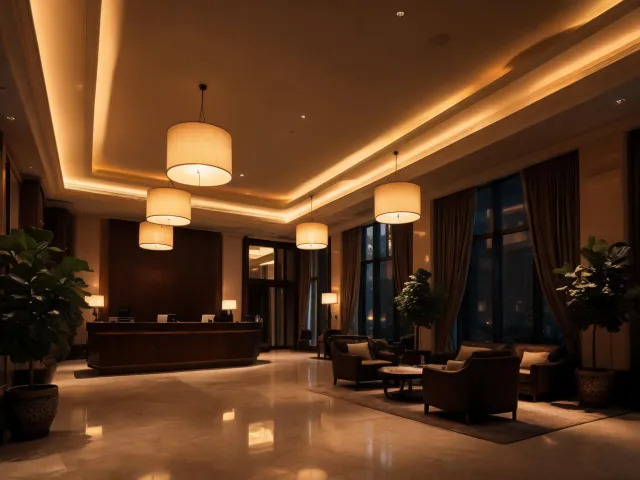
Confirm low-end dimming, driver compatibility and warm CCT behavior. Integrated sources can refine form, while serviceable components may lower long-term maintenance disruption.
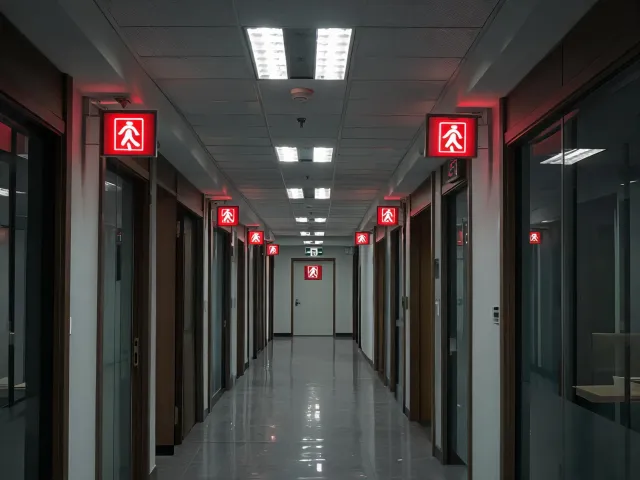
Separate normal-lighting goals from egress requirements. Verify emergency transfer, battery or central-system assumptions and local code review documentation.
These counts organize the review rather than promise a universal outcome. Each model should state room dimensions, mounting height, reflectance, calculation plane, light-loss factor and the exact IES or LDT file. Critical environments can add a physical mockup or measured verification after installation. In occupied buildings, commissioning should confirm sensor coverage, timeout, daylight setpoints and manual override behavior under real operating conditions.
Centralized and distributed control architectures also create a practical trade-off. Central management can simplify global schedules and reporting, while distributed zones can improve local flexibility and fault isolation. The better choice depends on network responsibility, commissioning capability, future tenant changes and the facility team's maintenance model. Cooper Lighting application review documents those criteria without presenting one architecture as correct for every site.
Share the task, geometry, mounting and controls narrative for application-led guidance.